THREE:It is impossible to conceive the extent of suffering and desolation inflicted upon society, almost every family being involved, more or less, in the general calamity. Flourishing firms were bankrupt, opulent merchants impoverished, the masses of working people suddenly thrown out of employment, and reduced to destitution; and all from causes with which the majority had nothing to do¡ªcauses that could have been prevented by a proper monetary system. If Bank of England notes had been a legal tender, to all intents and purposes supplying the place of gold as currency; if these notes had been supplied to the country banks in any quantities they required, ample security being taken to have assets equal to their respective issues, then the currency would have had an elastic, self-adjusting power, expanding or contracting according to the requirements of commerce. Inordinate speculation would not have been stimulated by a reckless system of credit, and business would have been conducted in a moderate and judicious manner, instead of rushing on at a high pressure that rendered a crash inevitable. The Government, after anxious and repeated deliberations, supplied a remedy on this principle. They determined to issue one-pound and two-pound notes of the Bank of England, for country circulation, to any amount required. In the meantime the Mint was set to work with all its resources in the coining of sovereigns[244], which, for the course of a week, were thrown off at the rate of 150,000 a day. The notes could not be manufactured fast enough to meet the enormous demand for carrying on the business of the country. In this dilemma the Bank was relieved by a most fortunate discovery¡ªa box containing ¡ê700,000, in one- and two-pound notes that had been retired, but which were at once put into circulation. The people having thus got notes with Government security, the panic subsided, and the demand for gold gradually ceased. The restoration of confidence was aided by resolutions passed at a meeting of bankers and merchants in the City of London, declaring that the unprecedented embarrassments and difficulties under which the circulation of the country laboured were mainly to be ascribed to a general panic, for which there were no reasonable grounds; that they had the fullest confidence in the means and substance of the banking establishments of the capital and the country; that returning confidence would remove all the symptoms of distress caused by the alarms of the timid, so fatal to those who were forced to sacrifice their property to meet unexpected demands. The new measures so promptly adopted and so vigorously carried into effect, raised the circulation of the Bank of England notes in three weeks from ¡ê17,477,290 to ¡ê25,611,800. Thus the regular and healthful action of the monetary system was restored by an adequate circulation of paper money, on Government security, without specie to sustain it. There were at the time of the crash 770 country bankers; 63 stopped payment, 23 of them having subsequently resumed business, and paid twenty shillings in the pound; and even those that were not able to resume, paid an average of seventeen shillings and sixpence in the pound. It was estimated that the total loss to the country by this panic was one hundred million pounds.
FORE:The procession, on its return, presented a still more striking appearance than before, from the circumstance that the Queen wore her crown, and the royal and noble personages their coronets. The mass of brilliants, relieved here and there by a large coloured stone, and the purple velvet cap, became her Majesty extremely well, and had a superb effect. The sight of the streets "paved with heads," and the houses alive with spectators, was most impressive. The Queen entertained a party of one hundred at dinner, and in the evening witnessed, from the roof of her palace, the fireworks in the Green Park. The Duke of Wellington gave a grand banquet at Apsley House, and several Cabinet Ministers gave official State dinners next day. The people were gratified, at the solicitation of Mr. Hawes, M.P. for Lambeth, with permission to hold a fair in Hyde Park, which continued for four days, Thursday, Friday, Saturday, and Monday. The area allotted comprised nearly one-third of the park, extending from near the margin of the Serpentine river to a line within a short distance of Grosvenor Gate. To the interior there were eight entrances, the main one fifty feet wide, and the others thirty feet each. The enclosed area was occupied by theatres, taverns, and an endless variety of exhibitions, the centre being appropriated to lines of stalls for the sale of fancy goods, sweetmeats, and toys. The Queen condescended to visit the fair on Friday. The illuminations on the night of the coronation were on a larger and more magnificent scale than had been before seen in the metropolis, and the fireworks were also extremely grand. All the theatres in the metropolis, and nearly all the other places of amusement, were opened gratuitously that evening by her Majesty's command, and though all were crowded, the arrangements were so excellent that no accident occurred. In the provinces, rejoicing was universal. Public dinners, feasts to the poor, processions, and illuminations were the order of the day. At Liverpool was laid the first stone of St. George's Hall, in presence of a great multitude. At Cambridge 13,000 persons were feasted on one spot, in the open field, called Parker's Piece, in the centre of which was raised an orchestra for 100 musicians, surrounded by a gallery for 1,600 persons. Encircling this centre were three rows of tables for the school children, and from them radiated, like the spokes of a wheel, the main body of the tables, 60 in number, and 25 feet in length. Beyond their outer extremity were added 28 other tables, in a circle; and outside the whole a promenade was roped in for spectators, who were more numerous than those who dined. The circumference of the whole was more than one-third of a mile. Other great towns similarly distinguished themselves.
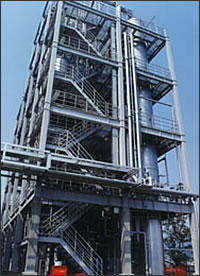
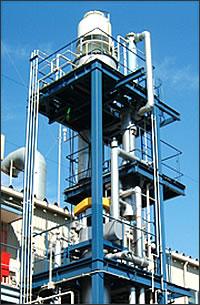
Methanol refinement systems, amyl alcohol refinement systems, ethanol refinement systems, hexanol distillation systems, propanol refinement systems, cyclohexanol distillation systems, isopropanol dehydration systems, ethylene glycol recovery systems, and butanol distillation systems.
FORE:[See larger version]When Washington arrived at the camp at Cambridge, instead of twenty thousand men, which he expected on his side, he found only sixteen thousand, and of these only fourteen thousand fit for duty. He describes them as "a mixed multitude of people under very little order or government." They had no uniforms; and Washington recommended Congress to send them out ten thousand hunting-shirts, as giving them something of a uniform appearance. There was not a single dollar in the military chest; the supply of provisions was extremely deficient and uncertain. There was a great want of engineering tools; and he soon discovered that the battle of Bunker's Hill, which, at a distance, was boasted of as a victory, had been a decided defeat. He immediately set about to reduce this discouraging chaos into new order. Assisted by General Lee, he commenced by having prayers read at the head of the respective regiments every morning. He broke up the freedom which confounded officers and men; he compelled subordination by the free use of the lash, where commands would not serve. He kept them daily at active drill. He laboured incessantly to complete the lines, so that very soon it would be impossible for the enemy to get between the ranks. But the great and¡ªif the English generals had been only properly awake¡ªthe fatal want was that of powder. Washington found that they had but nine rounds of powder to a musket, and next to none for the artillery. "The world," said Franklin, "wondered that we so seldom fired a cannon; why, we could not afford it!" And all this was disclosed to General Gage by a deserter, and he still lay in a profound slumber! The Ministry at home, scarcely more awake to the real danger, were yet astonished at his lethargy; and they recalled him under the plea of consulting him on the affairs of the colony. He sailed from Boston in October, leaving the chief command to General Howe.
Hexane distillation systems, tall oil distillation systems, benzene distillation systems, lubricating oil refinement systems, xylene-free distillation systems, low-boiling gas distillation systems, ethylbenzene recovery systems, fusel oil distillation systems, naphthalene distillation systems, propylene recovery systems, and turpentine oil distillation systems.
FORE:The miscellaneous literature of this reign was immense, consisting of travels, biographies, essays on all subjects, and treatises in every department of science and letters. Prominent amongst these are the "Letters of Junius," who, in the early part of the reign, kept the leading statesmen, judges, and the king himself, in terror by the relentlessness of his scarifying criticisms. These letters, which are the perfection of political writing, have been ascribed to many authors, but most generally to Sir Philip Francis; though it is hard to speak on the subject with certainty. The writings of Dr. Johnson furnish many items to this department. His "Dictionary of the English Language" (1755) was a gigantic labour; his "Lives of the Poets," his "Tour to the Western Isles," would of themselves have made a reputation, had he never written his poetry, his periodical essays, or edited Shakespeare. Burke, too, besides his Speeches, added largely to general literature. He wrote his "Inquiry into the Origin of the Sublime and Beautiful;" assisted in the composition of the Annual Register for several years; and, in 1790, published his most famous work, "Reflections on the French Revolution." Besides these he wrote political letters and essays. Lady Mary Wortley Montagu produced her celebrated Letters about the middle of the century, and many other women were popular writers at this period: Sophia and Harriett Lee, Anna Maria Williams, Mrs. Lennox, Mrs. Catherine Talbot, Elizabeth Carter, the translator of Epictetus, Mrs. Montagu, an essayist on Shakespeare, Mrs. Chapone, author of "Letters on the Improvement of the Mind," Mrs. Barbauld, and Mrs. Charlotte Smith. In theology, metaphysics, and mental philosophy, the earlier portion of the reign was rich. In rapid succession appeared Reid's "Inquiry into the Human Mind," Campbell's "Answer to Hume on Miracles," Beattie's "Essay on Truth," Wallace's "Essay on the Numbers of Mankind," and Stuart's "Enquiry into the Principles of Political Economy." But nine years after Stuart's work appeared another on the same subject, which raised that department of inquiry into one of the most prominent and influential sciences of the age. This was the famous treatise "On the Nature and Causes of the Wealth of Nations," by Adam Smith (1776), which produced a real revolution in the doctrines of the production and accumulation of wealth. In teaching the advantages of free trade and the division of labour it has rendered incalculable services to mankind.The result produced intense excitement, and led to rioting and outrage in the metropolis, and in some of the provincial towns. In London, the Duke of Wellington, the Duke of Cumberland, and the Marquis of Londonderry, were assaulted in the street, and rescued with difficulty from the fury of the mob. Lord Londonderry, who had signalised himself during the debate by the violence of his opposition, was struck senseless from his horse by a shower of stones at the gate of the palace, amidst cries of "Murder him! Cut his throat!" Persons respectably dressed, and wearing ribbons round their arms, took the lead on these occasions, giving orders, and rushing from the crowd. The houses of the Duke of Newcastle, Lord Bristol, and all other anti-Reform peers, had been visited by the mob, and left without glass in their windows. All the shops in town were shut. "The accounts from Derbyshire, Nottinghamshire, and other places," wrote Lord Eldon, "are very uncomfortable. I heard last night that the king was frightened by the appearance of the people outside of St. James's."
Ether distillation systems, camphor distillation systems, epichlorohydrin distillation systems, aniline distillation systems, dioxane refinement systems, acetonitrile distillation systems, furfural refinement systems, formalin distillation systems, cyclohexane distillation systems, monoethanolamine rectification systems, polyglycol ether distillation systems, dimethylformamide recovery systems, acrylic glycol ether distillation systems, acrylonitrile refinement systems, acetone recovery systems, pyridine distillation systems, methyl ethyl ketone recovery systems, picoline distillation systems, methyl isobutyl ketone recovery systems, and acetaldehyde recovery systems.